Showing posts with label Reading. Show all posts

Wednesday, November 20, 2019

Reading Notes Week 14: Part B

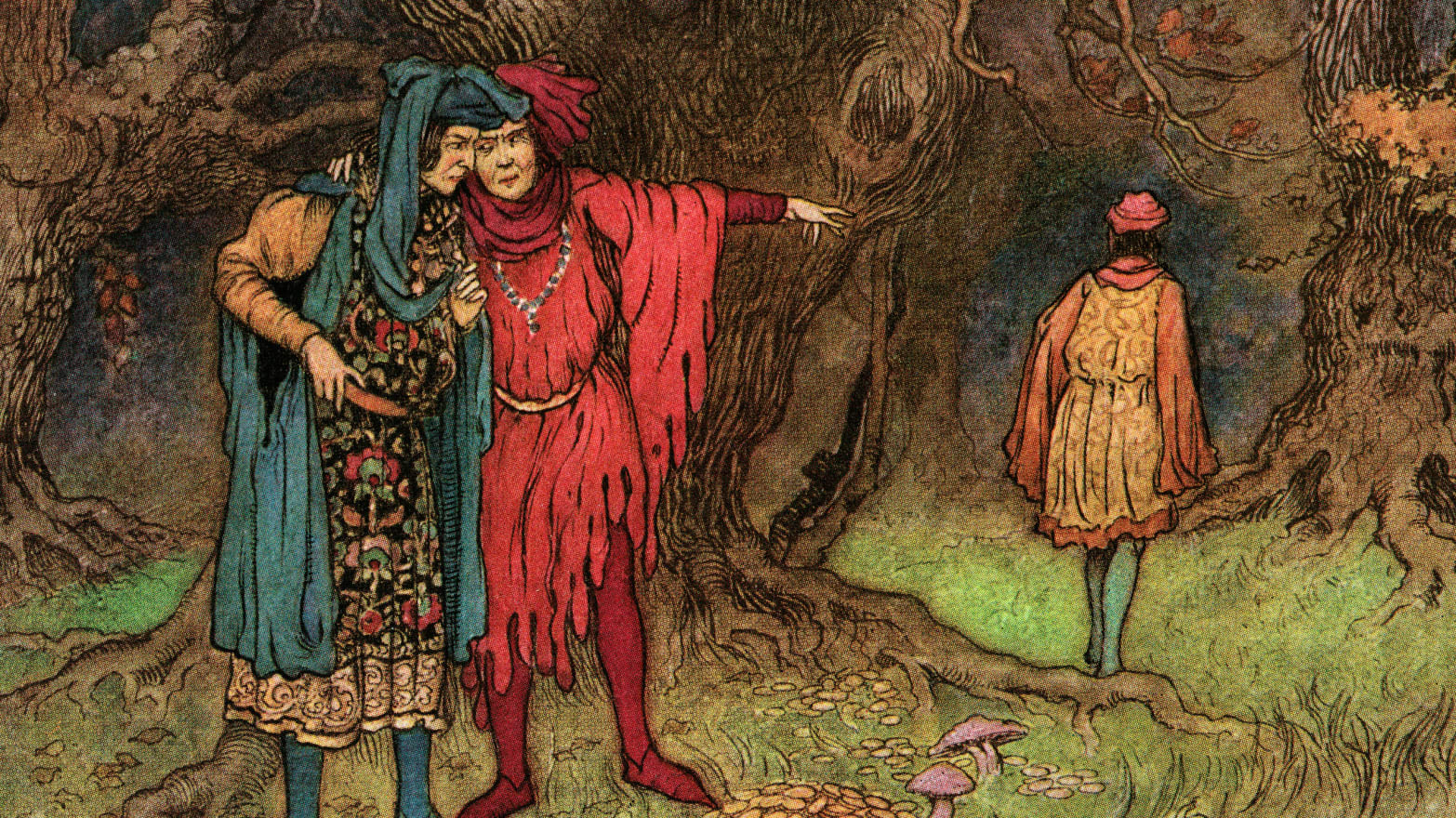
That ending is terrible! Southpark totally ripped an episode from the Decameron unit where the lady ate her lover's heart! In some ways, these stories have an interesting contrapasso or maybe that's the wrong word to describe it, but there is a nice twist for the mora crimes that the characters permit. The stories are both funny and tragic at the same time. I think this is achieved because it mixes in an element of surprise with humor so you never expect what is happening. And then once you start to suspect it, and your beliefs confirmed, it makes it even worse. These Decameron stories are hilarious.

Bibliography: The Decameron by Boccaccio, translated by J. M. Rigg (1903)

Sieur Guillaume de Roussillon slays his wife's lover, Sieur Guillaume de Cabestaing, and gives her his heart to eat. Coming to wit thereof, she throws herself from a high window, dies, and is buried with her lover. 39th tale of "Decameron" by Giovanni Boccaccio, in " French transl. by Laurent de Premierfait, 15th c.
Lady eats Guillaume de Cabestaing's heart

Reading Notes: Week 14 Decameron Part A

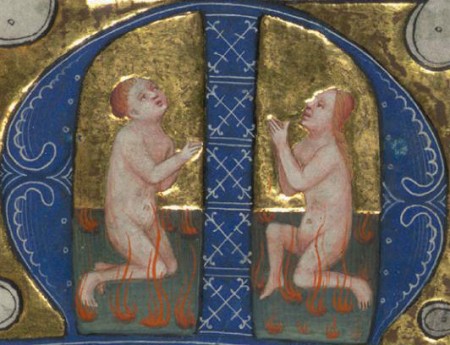
The stories in the Decameron remind me of Aesop's fables. Most of the tales told in these formats have some type of moral message to it and is neat seeing how this one blends Catholic religious morals and fables. The language in these stories is very catholic, specifically the story about Ferondo and he's going to Purgatory. The only other reading of purgatory that I've ever read was Dante's Purgatorio. Nonetheless, I am glad I chose the Decameron because the tales are interesting and funny.

Bibliography: The Decameron by Boccaccio, translated by J. M. Rigg (1903).

two souls burning in purgatory
Ferondo cuckolded by his wife and the Abbot

Thursday, November 14, 2019

Reading Notes Week 13: Canterburry tales Part A

The Canterbury Tales unit blew me away. I've never read any of these stories until now and they remind me of Aesop's fable a little. Although a lot of the stories contain tricksters, most of the stories seem to also have a moral message to them. Specifically, the stories about the Reveler's stood out to me and the guide notes on tops help form a conclusion a head of time that the brothers would kill eachother in search of death. That was probably the most fascinating. On the flip side, there were also stories that I thought ended very abruptly, but that's fine too. The theme of death and desire also seem to loom in these stories pretty often which probably connotes to a cardinal vice of lust during these times.
The older brother plotting to kill the young one
Bibliography: The Chaucer Story Book by Eva March Tappan (1908).

Thursday, November 7, 2019

Reading Notes: Part B Beowulf

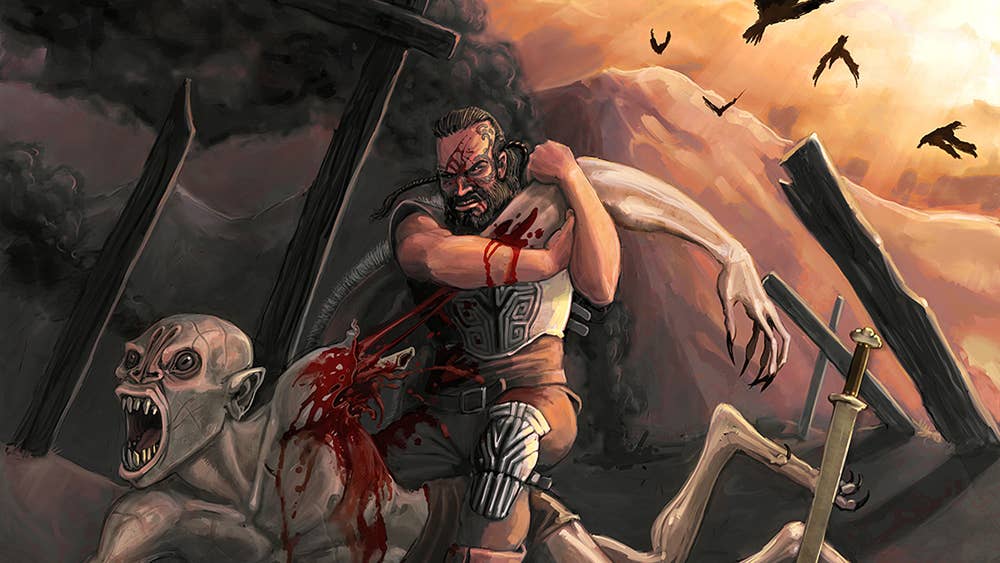
This week I reread some of Beowulf! I am continually amazed to think that these stories did not have an original author that we know about. I specifically focused on the way that they portrayed evil in the world this time. It is pretty amazing how the town hall that everyone goes to for drinking and community is also the only place of civilization in the world of Beowulf. Pretty much everything outside is darkness and in some sense, Beowulf's choosing to fight Grendel, Grendel's mom, and the dragon are telling in a way that we need someone or possibly God to keep the evils away from civilization.

27-BEOWULF.jpg

Bibliography: The Story of Beowulf by Strafford Riggs with illustrations by Henry Pitz (1933).

Thursday, October 31, 2019

Reading Notes: Hiawatha Part B

The animal usage in the second part of the Hiawatha readings stood out to me. "Called the Mama, the woodpecker," and "The Keneu, the great war-eagle," are some examples of the titles. It's amazing how these stories continue to incorporate animals into their tales. I have more reverence now for the Native American epics.

hiawatha

Story source: The Song of Hiawatha by Henry Wadsworth Longfellow (1855).

Wednesday, October 30, 2019

Reading Notes: Hiawatha Read Part A

The readings this week are unique. It is interesting reading a more poem-style epic similar to the inferno. I typically never thought about or considered native American epics before and it never occurred to me that such epics would exist. However, it makes sense that they would because these people have been around for as long as their western cousins. Anyways, the unit over Hiawatha was really pretty. It combined both stories of people and supernatural forces similar to other epics and was really enjoyable to read. I focused mainly on the style and flow and it was very easy to read.

Little Hiawatha (1937)Little Hiawatha 1937

Bibliography:
The Song of Hiawatha by Henry Wadsworth Longfellow (1855).

Thursday, October 24, 2019

Reading Notes: Alaskan stories part B

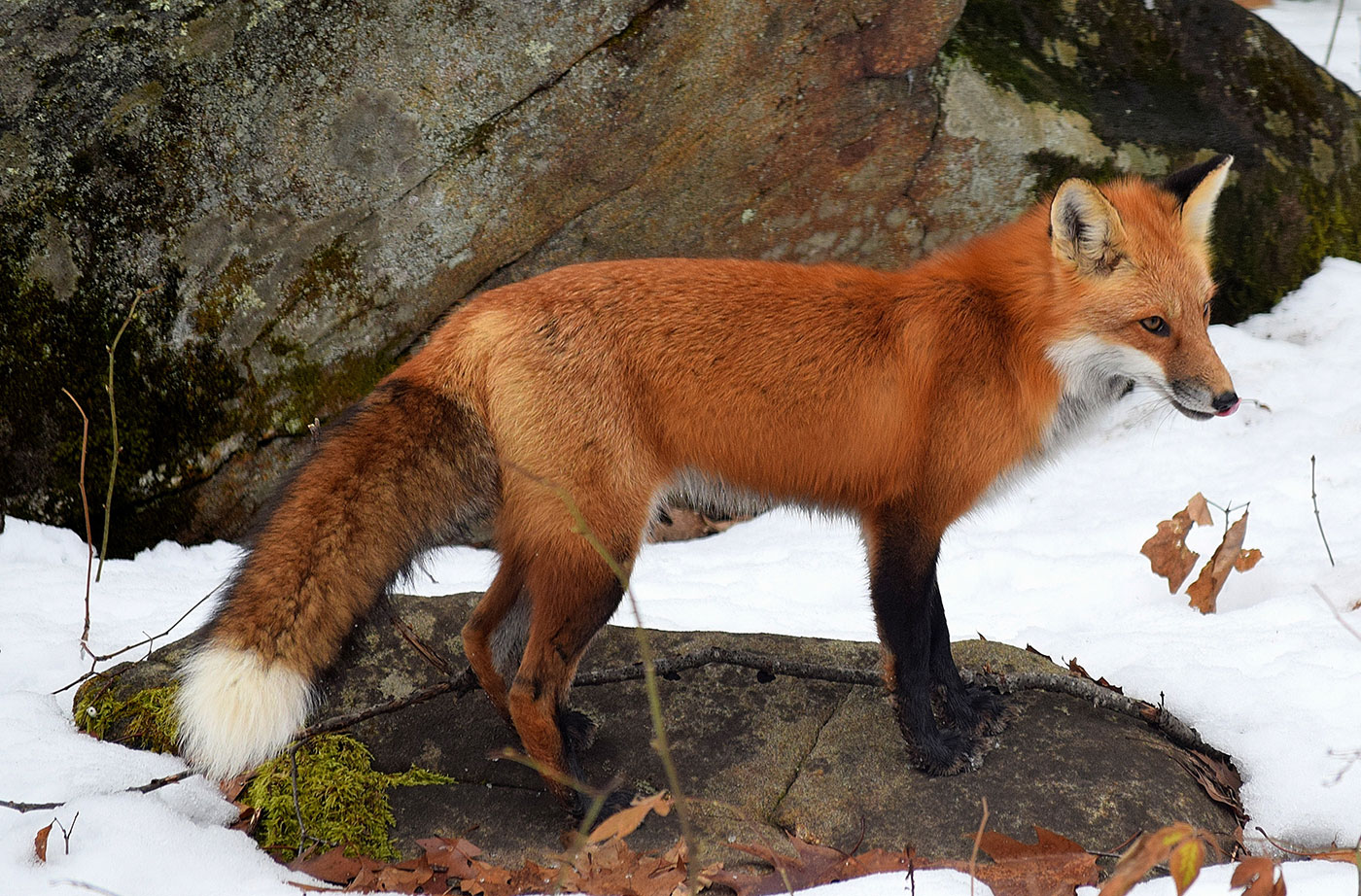
The things that I focused on for these readings were the anthropomorphism of the animals. One thing a lot of these Native American stories have in common is they seem equally to equate humans to being like a certain animal and then turning them into that animal itself. This includes sometimes adding those animal's flaws as well. My favorite story was the one about the foc who tricked the eagle into dropping two of its eggs for him. It was really cunning of the fox to do that and as a result he got punished for it. 

Hal Winters Red fox in South China
fox

bibliography:
Myths and Legends of Alaska, edited by Katharine Berry Judson (1911).

Wednesday, October 23, 2019

Reading Notes: Alaskan Stories Part A

The use of anthropomorphism in these stories is really interesting. Each animal has its own human-like quality with some animals at some point even turning into humans. I focused on the story-telling in these stories and there were almost some Biblical references such as when the crossing of the sea could not happen because of the tide. It almost sounded like Moses splitting the river. Also, it's pretty neat as Raven is somewhat a creation story but also a trickster story.

Raven in flight.
raven

Bibliography:
Myths and Legends of Alaska, edited by Katharine Berry Judson (1911).

Thursday, October 17, 2019

Reading Notes: Chinese Fairy tales Part B

Today I focused on the story progressions of these Chinese fairy tales. I'm always quite surprised by how abruptly a lot of them end. For example, the story of retribution made no sense to me. I still do not understand why the story ended or started the way it did. Could it be that the moral is something along the lines of Karma? And you get what you give? However, there were also story lines that really broke my heart like the story with the emperor and the hanging of his wife and he was so grieved afterward that he tried to find her in the otherworlds.

yang gui fe sitting
Yang Gui Fe


Bibliography:
The Chinese Fairy Book, ed. by R. Wilhelm and translated by Frederick H. Martens (1921).

Wednesday, October 16, 2019

Reading notes: Chinese fairytales Part A

Today I focused on the description of the characters in the fairy tales. Specifically, I really enjoyed the story about the panther. The idea of the kids telling the panther that he has big eyes and big feet remind me of the story of little red ridng hood.  The other story with great descriptors was the story about the God of War. The way that they described his eyes and eyebrows and face were great and had amazing imagery.

cat, black, and dark image
the panther

Bibliography:
The Chinese Fairy Book, ed. by R. Wilhelm and translated by Frederick H. Martens (1921).

Thursday, October 3, 2019

Reading Notes: Monkey King Part B

The story of the rebellion of Sun Wu Kung against heaven really reminds me of Paradise Lost by John Milton. In some ways, despite all the treachery and rule-breaking, I find myself relating and when he lost against Buddha I felt really sad for him. I guess the Monkey King appeals to all our vices and sense of pride eventually is his own downfall. The Synopsis ata the end is pretty neat and I am glad that Sun Wu Kung was able to become a Buddha. The redemption story and in the end where his helmet disappeared was touching. I think I want to read more Asian stories now. They're pretty cool!

Bibliography:
The Chinese Fairy Book, ed. by R. Wilhelm and translated by Frederick H. Martens (1921).

escaping Buddha's Palm

Wednesday, October 2, 2019

Reading Notes Week 7: Monkey King Part A

The story of the Monkey King, Sun Wu Kung, is really unique because I find myself relating to the monkey king. The desire to escape death and the anxiety of death is something that affects humans and the quest to defeat it is very similar to the story of the Buddha. In some ways it seems like Sun Wu Kungs desire to defeat death seems almost futile as nothing in the human world can escape death, however, at least to Siddhartha, we can escape death by pursuing enlightenment and virtue? It's very similar to most religious values and I can see where those lines intersect with these stories. I'm excited to read what is going to happen next.

Bibliography:
The Chinese Fairy Book, ed. by R. Wilhelm and translated by Frederick H. Martens (1921).

Image result for sun wu kung
Sun Wu Kung surfing the clouds

Thursday, September 26, 2019

Reading Notes: Life of Buddha Part B

Victory over Mara
Victory over mara
The whole idea of Siddhartha as a hero is really unique in the story of the Buddha. From all my previous readings, a hero is someone who has to physically fight the evil, usually with a weapon of some sort. In Buddha, Siddhartha is a hero because of his courage to conquer old age and death. By conquering old age and death, he gives up everything in pursuit of supreme knowledge. That idea of a hero pursuing supreme knowledge to conquer death seems completely different even from the other Indian Epics I've read in class. Overall, I think the story is great, but, it seems that Buddha's attempt to shine light into the world would be overall futile as if nobody gave birth and nobody had a desire to then there would be no humans. Thus it would lead to the end of humankind. This is similar to when Paul the Apostle said that marriage is a concession and although the ideal is to be celibate, most people are not that strong. I would have to look further into Buddhist ideas to understand this.


Bibliography:
The Life of Buddha by Andre Ferdinand Herold (1922).

Wednesday, September 25, 2019

Read Notes: Life of Buddha Part A

This is my first time exploring the story of the Buddha. Although in highschool I had friends that read Siddhartha, I never read it myself. One of the things that really stood out to me throughout college was the Buddhist idea of taking the "I" out of suffering and to think that there is suffering. That idea is really unique as throughout the story, none of the old age, sickness, and death, was present in Siddhartha himself, but rather, he saw it and felt it. This contrasts with his actual environment in which he has everything that he could ever really need. This idea of there IS something in the world became prevalent and is a coming of age moment for Siddhartha as he realized that the world has pain. It's quite beautiful.

Image result for patrick as buddha
Patrick meditating?
Bibliography:
The Life of Buddha by Andre Ferdinand Herold (1922).
Thursday, September 19, 2019

Reading Notes: Sindbad Part B

I really enjoyed the story of Sindbad and it encourages me to read the Arabian Nights. One thing that stood out to me about this story is the way that strangers treat him with hospitality. Perhaps my favorite is when he encounters the King of Serndib and the slaves that meet him first feed him. This hospitality reminded me of Xenia or the theme of hospitality that strangers greet people in Greek epics like The Odyssey. Anyways, other favorable mentions are that old guy who rides on Sindbad's shoulder and the elephants who show him the ivory.

Bibliography: Andrew Lang The Arabian Nights

Wednesday, September 18, 2019

Reading notes Sindbad Part A

This is my first time reading Sindbad. I really enjoyed all the adventures of the first four voyages! It really makes me think about that poem by Alfred Lord Tennyson called "Ulysses." It seems like Sindbad no matter what terrible adventure he had before always wants to go back for more! My favorite one is the fourth voyage where he has to die with his wife, and he then kills some lady that was going into the hole and took her food and later escaped. lol

Bibliography
The Arabian Nights' Entertainments by Andrew Lang

Popeye meets Sindbad

Thursday, September 12, 2019

Reading Notes: Infancy Gospels Part B

The second parts of the infancy gospels revealed miracles regarding Christ as his holy baby water as well as Christ killing people. I am shocked by some of these stories but I also think it is kind of funny. It's interesting how a lot of these miracles did not make it into the canon as I think some more stories of kid Jesus getting mad at a kid that bumped into him and killing him or resurrecting a kid that fell off the roof just to let his parents know that he did not kill this kid would really add to the personality of Jesus.  One thing that I did notice overall is how human-like Jesus was like at certain moments and the author stated that he gets mad at some points.
baby Jesus
Bibliography:
The Lost Books of the Bible, edited by Rutherford H. Platt, Jr. (1926): The First Gospel of the Infancy of Jesus Christ.

Tuesday, September 10, 2019

Reading Notes: infancy gospels part A

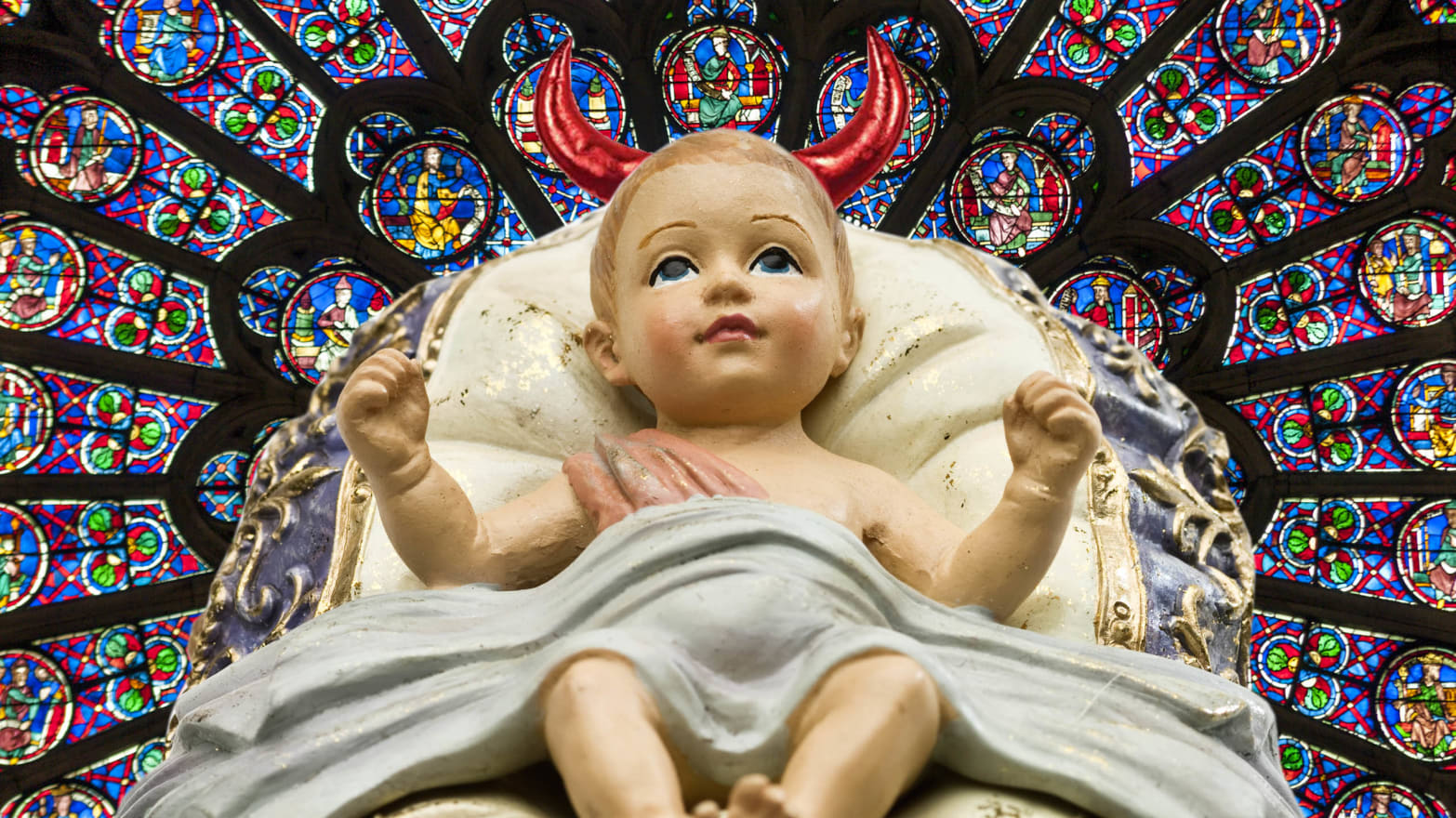
This is my first time reading the infancy gospels and I am quite entertained by the stories. I had not idea that there were other stories of Christ that were not included in the Bible. I really liked the miracle stories of the Baby Jesus and especially how that little devil kid put the towel on his head and crows and serpents came out of him. The way that all these people interacted with each other are really interesting and they all had the same conclusion that it was God doing the workd.


Bibliography:
The Bible King James Version
The Lost Books of the Bible, edited by Rutherford H. Platt, Jr. (1926).
was baby Jesus a Holy Terror?
the daily beast

Tuesday, September 3, 2019

Reading Notes: The Odyssey Part B

James Gillray, Between Scylla and Charybdis. Image: Wikimedia Commons
Scylla and Charybdis
Today I read the rest of the Odyssey. One thing that stuck out to me was reading the death of Odysseus's crew members in-between Scylla and Charybdis. How terrible fate it must be to go between Scylla and Charybdis. One thing that stood out to me that I did not recognize the first time was how Odysseus's men cried out for help and their last actions were reaching out toward Odysseus before Scylla consumed them. I can only imagine the grief Odysseus felt as his men, who harkened their captain's words, died crying out to their leader. For Odysseus was in charge of bringing everyone home and he failed and that is very sad.

Bibliography:
Tony Kline The Odyssey 
http://mythfolklore.blogspot.com/2014/05/odyssey-sirens-scylla-and-charybdis.html


Monday, September 2, 2019

Reading Notes: The Odyssey Part A

Today I read part A of the Odyssey readings. The stories covered the encounter and escape from Polyphemus, through Circe, and the death of Elpenor, the youngest crew member who fell off the roof of Circe's house. One thing that really stood out to me were the adjectives they used to describe Dawn such as "rosey fingered." I'm going to incorporate some more of those descriptors to my story telling this week.

I think maybe a story about Elpenor would be a good retelling this week.
Rosey Fingered Dawn
Rosey Fingered Dawn


Bibliography:
The Odyssey translated by Tony Kline
http://mythfolklore.blogspot.com/2014/05/myth-folklore-unit-homers-odyssey.html